
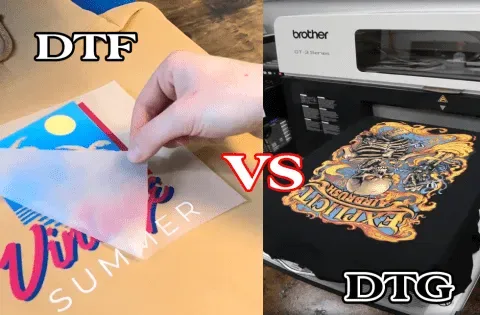
In the realm of custom apparel, the debate of DTF vs. DTG has become increasingly relevant as businesses seek the best printing methods to meet their needs. Direct to Film (DTF) and Direct to Garment (DTG) printing each offer distinct advantages that cater to various production requirements. Understanding these differences is essential for anyone involved in apparel printing, as each method affects not only the final product’s quality but also operational efficiency and cost. Whether you’re a startup looking to create vibrant, personalized designs or an established brand aiming to streamline production, grasping the nuances of DTF and DTG will guide your investment in printing technology. As we delve deeper into these printing technologies, you’ll discover how they can transform your custom apparel offerings.
When considering printing methods for textile design, it’s essential to explore alternatives like Direct to Film (DTF) and Direct to Garment (DTG) techniques. These apparel printing methods leverage advanced technology to create stunning designs on various fabrics, appealing to a broad spectrum of consumer tastes. DTF printing utilizes a transfer process that lends itself to versatility, while DTG printing harnesses inkjet technology to produce high-resolution images directly onto garments. As the landscape of custom textile creation evolves, businesses must stay informed about each method’s capabilities and limitations to make educated decisions. With the growing trend of personalized consumer experiences, understanding these options ensures that brands can effectively respond to market demands.
A Comprehensive Overview of DTF Printing Technology
Direct to Film (DTF) printing has revolutionized the apparel decoration industry, providing an accessible method for producing high-quality prints. This technique utilizes a specialized film to transfer vibrant and intricate designs onto a variety of fabrics, expanding the creative possibilities for custom apparel. Unlike traditional printing methods, DTF is adaptable for both light and dark textiles, making it a versatile choice for businesses seeking to offer a broader range of products. The ability to print seamlessly on materials such as polyester, nylon, and cotton adds to its appeal, allowing entrepreneurs to cater to diverse customer preferences.
Businesses are increasingly turning to DTF printing due to its cost-effective nature and high-volume production capabilities. With rapid advancements in printing technology, DTF has been streamlined to accommodate short turnaround times, making it ideal for fulfilling bulk orders of custom apparel. This speed ensures that businesses can meet the rising demand from consumers seeking personalized and unique designs without compromising on quality or efficiency. Moreover, the comparatively lower startup costs associated with DTF equipment allow new businesses to enter the market without hefty investments, thus democratizing access to advanced apparel printing.
Frequently Asked Questions
What are the key differences between DTF printing and DTG printing?
The primary differences between DTF (Direct to Film) and DTG (Direct to Garment) printing lie in their application methods, fabric compatibility, and output quality. DTF printing involves printing designs on a special film that is transferred onto fabric, making it versatile for various materials. In contrast, DTG printing directly applies ink onto fabric, primarily excelling on cotton and cotton-blends, delivering highly detailed images with vibrant colors.
Is DTF printing suitable for all fabric types compared to DTG printing?
Yes, DTF printing is more versatile than DTG printing, as it can be applied to a wide range of fabrics, including nylon, polyester, and cotton. While DTG printing is ideal for cotton and blends, it has limited compatibility with other materials, making DTF a preferable choice for businesses looking to work with diverse fabrics.
Which printing method, DTF or DTG, is more cost-effective for small businesses?
DTF printing generally offers a more cost-effective solution for small businesses due to its lower initial equipment costs and operational expenses. In contrast, DTG printing often requires more substantial investment and higher maintenance costs, which may not be ideal for budget-conscious operations.
How do DTF printing and DTG printing compare in terms of print quality?
When it comes to print quality, DTG printing typically achieves higher detail and vivid colors due to its advanced inkjet technology. DTF printing produces good quality but may vary depending on the substrate. For intricate designs or artwork, DTG is often favored, while DTF suits broader applications.
What are the sustainability aspects of DTF vs. DTG printing?
DTG printing is often regarded as more eco-friendly, using water-based inks that result in less waste and fewer emissions compared to other methods. DTF printing, while versatile, may not offer the same environmental benefits. Businesses focused on sustainability may prefer DTG due to its greener printing technology.
Which printing method is better for high-volume custom apparel orders, DTF or DTG?
For high-volume custom apparel orders, DTF printing is generally the better option as it allows for quicker production times and cost efficiency. DTG printing, while excellent for detail and small batches, tends to be slower for large production runs, making DTF more suitable for bulk needs.
| Aspect | DTF (Direct to Film) | DTG (Direct to Garment) |
|---|---|---|
| Printing Method | Prints on a special film before transferring onto fabric using heat and pressure. | Prints designs directly onto fabric using inkjet technology. |
| Fabric Compatibility | Works on a variety of textiles, including nylon and polyester. | Best suited for cotton and cotton-blend fabrics. |
| Production Speed | Quick turnaround, ideal for high-volume orders. | Generally slower than DTF, less suited for bulk printing. |
| Print Quality | Good quality, though color vibrancy can vary with substrate. | Achieves high detail and vibrant colors. |
| Cost Efficiency | More cost-effective for small to medium operations; lower initial and operational costs. | Higher initial investment and maintenance costs, but excellent for custom orders. |
| Environmental Impact | Less eco-friendly; can produce waste depending on prints. | Utilizes water-based inks, resulting in less waste and fewer emissions. |
Summary
DTF vs. DTG is a crucial consideration for businesses in the apparel printing industry, as both methods have their strengths and weaknesses tailored to different operational needs. DTF offers versatility across various fabric types, high-volume production capabilities, and lower costs, making it ideal for businesses looking for adaptability and efficiency. In contrast, DTG shines with its capability for detailed designs and eco-friendly processes, appealing to custom order markets. Selecting the right method requires careful consideration of fabric types, production volume, and your business’s environmental goals, as each method distinctly impacts your operational efficiency and product quality.