
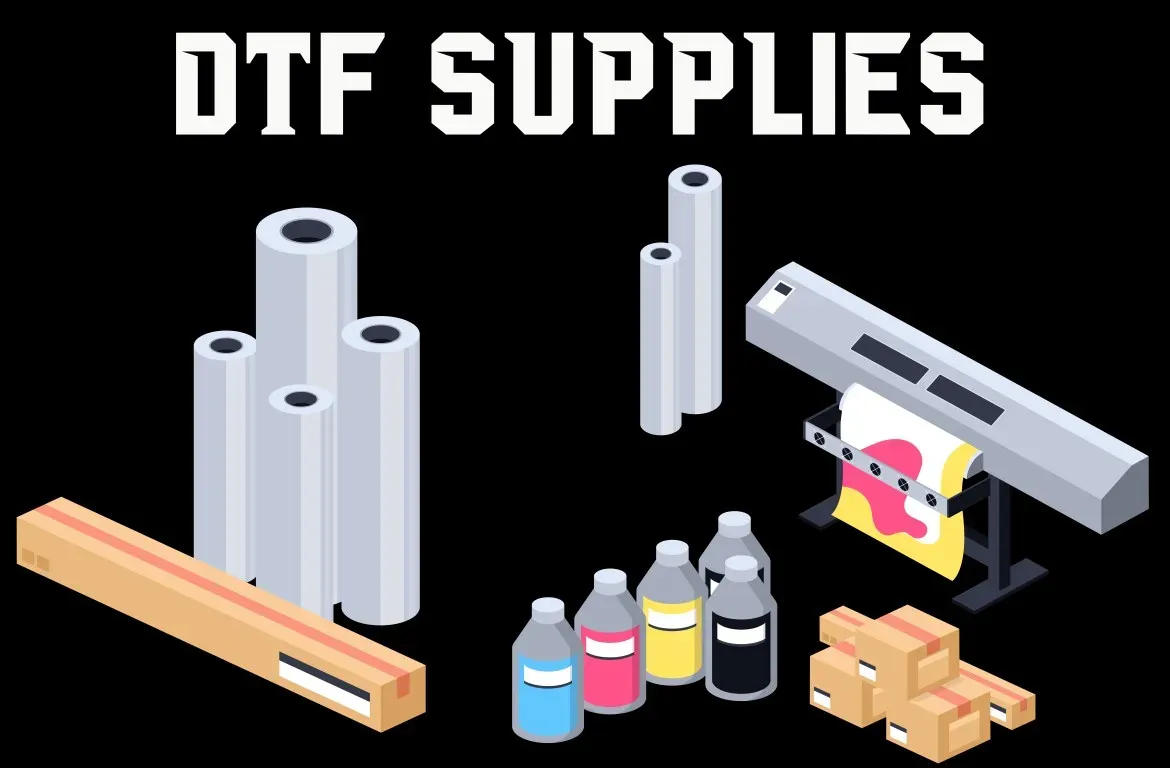
dtf supplies on a budget is more than a buzzword—it's a practical strategy for startups and hobbyists seeking professional results without breaking the bank. By focusing on core components like DTF printing supplies, film, inks, and a reliable heat press, you can achieve durable prints with lower upfront costs. Smart budgeting also means choosing budget DTF transfers and testing color accuracy with careful calibration to keep results consistent. We’ll show how affordable DTF ink and film, paired with a solid workflow, can deliver vibrant, clean images without premium prices. This approach prioritizes dependable DTF equipment on a budget and emphasizes maintenance and process discipline to ensure repeatable quality.
Think of this as a cost-conscious approach to digital transfer printing, where value meets performance rather than cutting corners. By framing the process around an economical workflow—selecting reliable entry-level printers, economical transfer films, and mid-tier inks—you still achieve crisp images. In LSI terms, related concepts like budget-friendly consumables, durable adhesive powders, and consistent color output reinforce the same topic without repeating terms. The emphasis is on scalable systems and steady calibration, so you can grow your DTF operation while keeping acquisition costs manageable.
dtf supplies on a budget: essential starter kit for quality prints
Starting with the essentials helps you translate ideas into finished products without breaking the bank. In a budget-friendly DTF workflow, focus on what actually impacts print quality and consistency: a dependable printing system, compatible inks, a quality transfer film, adhesive powder, a reliable heat press, and basic maintenance supplies. These are the core building blocks of the DTF printing supplies you’ll rely on most, and they determine whether your designs transfer cleanly to fabrics. By selecting entry-level gear known for stability and clear documentation, you reduce risk while you learn the process.
Once you’ve secured the basics, you can begin validating demand with budget DTF transfers and a lean setup. Don’t be tempted to overspend on premium options before you’ve proven your market. Use reliable, midrange consumables and emphasize consistency across batches. By keeping the initial footprint small, you can iterate quickly, measure results, and decide which upgrades deliver the biggest return on investment for your DTF equipment on a budget.
DTF printing supplies: how to maximize value on a budget
Maximizing value starts with planning your workflow around proven, repeatable steps. Invest in a clear design-to-product path, from pre-press to curing, and ensure each stage supports consistent output. Selecting compatible DTF printing supplies—inks, films, powders, and a heat press with stable temperature control—helps you lock in color accuracy and repeatable performance across jobs. A thoughtful approach to the core gear reduces waste and keeps costs predictable.
With a lean setup, you can test new designs and fabrics without risking your margins. Maintain a log of settings that work best on specific textiles, so future runs stay consistent. When you do upgrade, target improvements that directly impact throughput and color quality, rather than chasing novelty. This disciplined method aligns with DTF equipment on a budget, ensuring you grow capacity while preserving print integrity.
Affordable DTF ink and film that still deliver vibrant results
Affordable DTF ink and film can deliver professional results when you choose wisely. Seek inks and films with consistent batch quality, clear usage guidelines, and proven adhesion on common fabrics. The goal is to balance cost with predictability: cheaper components that still produce accurate color, clean transfers, and durable prints. When evaluating options, check datasheets for curing temperature ranges, release properties, and compatibility with your chosen adhesive powder and heat press settings.
To avoid surprises, run small test runs before committing to a large batch. Compare color density, gradients, and edge sharpness across several fabrics, and keep notes on any wrinkling or adhesion differences. Pair affordable ink with a film that offers easy release and wrinkle resistance, and calibrate your printer to the film’s color profile. With careful calibration, affordable DTF ink and film can rival higher-priced options without sacrificing quality.
Budget-friendly DTF transfers and consumables: predictable outcomes at lower costs
Budget DTF transfers can be a smart entry point for new shops and hobbyists seeking predictable outcomes at a lower cost. Look for transfers with consistent transfer yields across batches and stable adhesive behavior on the fabrics you commonly use. It helps if the transfers include clear instructions for pressing time and temperature, so you can standardize your workflow from the start. When paired with solid inks and films, budget transfers can deliver crisp imagery and durable results.
Consider the total cost of ownership when evaluating transfers: price per sheet, waste rate, and potential reprints. Favor suppliers who provide robust support and transparent usage guidelines, because good documentation reduces repeat runs and keeps your timeline on track. By integrating budget DTF transfers with reliable consumables, you maintain quality while keeping overhead under control.
DTF equipment on a budget: choosing the right gear now and upgrading later
DTF equipment on a budget doesn’t mean you skip capability; it means you sequence investments to maximize reliability. Start with an entry-level printer known for community support, pair it with reliable ink and film, and choose a heat press that provides uniform heat and consistent pressure. If affordable options exist in the used market, a carefully inspected refurbished unit can stretch your dollar further. The key is to ensure core workflows—from design to cure—are predictable enough to scale later.
When growth comes, reinvest in the upgrades that matter most for your production cadence: faster curing, more precise color management, and equipment with better maintenance access. By prioritizing robust consumables early and treating the hardware as a scalable piece of the workflow, you avoid bottlenecks and keep the operation moving smoothly as orders increase.
Quality control and workflow optimization with budget DTF supplies
Quality control (QC) is your best defense when working with budget DTF supplies. Build a simple QC checklist that covers color density, gradient smoothness, edge clarity, and adhesion on representative fabrics. Implement routine wash and dry tests, and document any changes in heat or timing that affect results. A repeatable QC process ensures you don’t miss defects that could erode customer trust, even when your inputs are affordable.
Develop a disciplined workflow that makes calibration, pre-press, printing, and post-processing routine. Color management starts with printer profiling and standardized fabric profiles; pre-press discipline reduces moisture and wrinkle-related issues; and regular batch testing helps track performance over time. By maintaining careful records and a proactive maintenance plan, you maintain high-quality outcomes with budget DTF supplies and protect your margins as you scale.
Frequently Asked Questions
What are the essential DTF printing supplies when you’re building dtf supplies on a budget?
Essential items include a suitable printing system (entry-level DTF printer or a converted printer), DTF inks, DTF transfer film, adhesive powder, a reliable heat press, and basic cleaning tools. Choose reputable suppliers with clear return policies and strong support. Start with small test runs to validate your setup before scaling.
How can I choose affordable DTF ink and film without sacrificing quality in my setup?
Look for affordable DTF ink and film from reputable brands that offer consistent batch quality and clear usage guidelines. Check compatibility with your printer, run small test batches, and compare color, adhesion, and wash durability before larger runs.
Are budget DTF transfers reliable for new shops or hobbyists?
Yes, budget DTF transfers can be reliable if they provide consistent batch results, predictable adhesive behavior, and good post-processing compatibility. Evaluate supplier guidance, fabric compatibility, and customer support, then validate with a few sample prints.
What should I know about DTF equipment on a budget before upgrading?
DTF equipment on a budget can start with an entry-level printer (or a converted printer), paired with a quality heat press and reliable consumables. Consider used or refurbished gear to cut costs, but prioritize consumables first and upgrade as demand grows.
How do I optimize my workflow using budget DTF transfers and affordable DTF ink and film to ensure consistent results?
To optimize workflow: calibrate color profiles, document fabric-specific settings, run routine test prints, maintain pre-press discipline, and keep a strict cleaning routine. This helps ensure consistent results when using budget DTF transfers and affordable DTF ink and film.
Where can I buy and compare prices for dtf supplies on a budget while ensuring quality?
Buy from reputable suppliers with clear return policies, look for bulk or bundle discounts, and compare total cost of ownership (yield, maintenance). Use community reviews and product datasheets to gauge real-world performance of DTF printing supplies on a budget.
| Section | Key Points |
|---|---|
| Introduction | DTF printing offers a versatile, cost-conscious path to customized products, focusing on affordable methods to achieve professional, durable results without breaking the budget. |
| Understanding the budget-friendly mindset | Optimize your setup for reliability and consistency by defining needs (colors, fabrics, weekly volume), and plan core components while considering long-term costs and supplier support. |
| Section 1: Essentials | Core components include: printing system (entry-level or converted printer), DTF inks, DTF transfer film, adhesive powder and curing method, heat press, and cleaning/maintenance supplies. Start with basics and avoid over-investing before demand is validated. |
| Section 2: Affordable inks and films | Seek mid-range inks/films with consistent batch quality, clear usage guidelines, and good adhesion across fabrics. Test color accuracy on small batches and verify compatibility with your film and adhesive powder. |
| Section 3: Budget-friendly transfers | Choose transfers with consistent results across batches, predictable adhesive behavior across fabrics, and good post-processing compatibility. Ensure supplier support and clear instructions. |
| Section 4: Equipment on a budget | Consider entry-level printers or converted machines, used/refurbished gear, and incremental upgrades. Prioritize consumables (inks, films, powder) before expensive hardware. |
| Section 5: Workflow optimization | Establish a disciplined workflow: color management, pre-press discipline, routine test prints, proper alignment, and regular cleaning to achieve repeatable results with affordable materials. |
| Section 6: Quality control & cost control | Implement a simple QC checklist: visual color/density checks, adhesion and wash tests, and timeline tracking to minimize reprints and protect margins. |
| Section 7: Purchasing wisely | Evaluate supplier reputation and return policies, seek bulk discounts and bundles, confirm compatibility and guarantees, and leverage community recommendations. |
| Section 8: Maintenance & care | Regular cleaning, part replacements as needed, proper storage of inks/films, and routine calibration to extend equipment life and sustain quality. |
| Conclusion | Budget-friendly DTF supplies can deliver high-quality prints when you focus on essential items, reliable consumables, and a disciplined workflow. Start with a solid core setup, test thoroughly, and scale as demand grows. With thoughtful purchasing and consistent production practices, you can build a cost-efficient DTF operation that maintains the outcomes customers expect. |
Summary
Conclusion: Budget-friendly DTF supplies can deliver high-quality prints when you focus on essential items, reliable consumables, and a disciplined workflow. Start with a solid core setup, test thoroughly, and scale as demand grows. With thoughtful purchasing and consistent production practices, you can build a cost-efficient DTF operation that maintains the outcomes customers expect.