
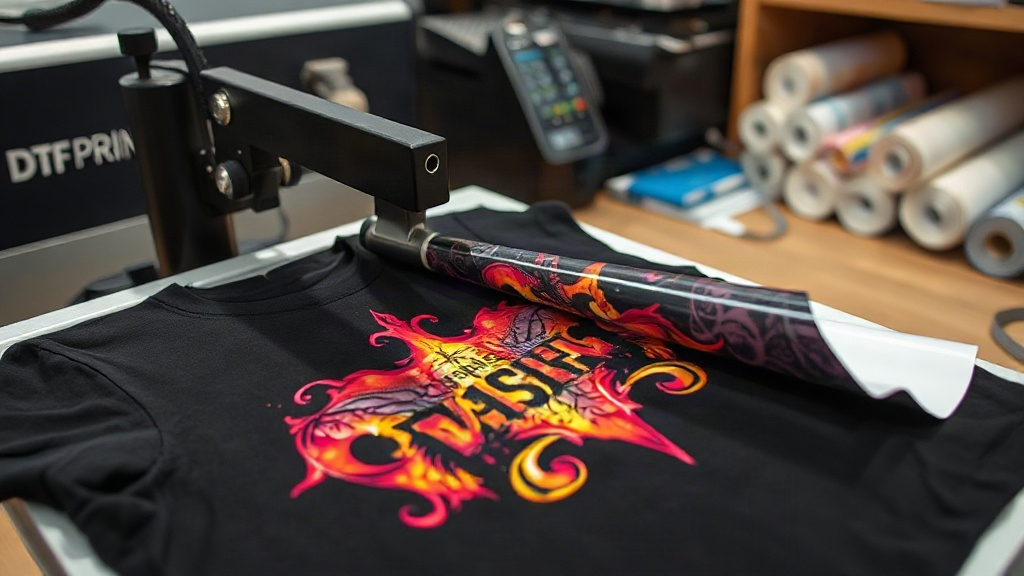
If you're in the custom apparel business, you've likely heard about DTF transfers. This innovative printing method is taking the industry by storm, offering vibrant colors and unmatched durability on a wide range of fabrics. Whether you're a small business owner looking to expand your product line or a DIY enthusiast wanting to create personalized gifts, understanding DTF transfers can open up a world of possibilities. In this guide, we'll dive deep into what DTF transfers are, how they work, and why they might be the perfect solution for your next project.
What Are DTF Transfers?
DTF stands for Direct to Film. It's a printing technology where your design is printed onto a special film, coated with a hot-melt adhesive powder, and then transferred onto fabric using a heat press. Unlike DTG (Direct to Garment) or screen printing, DTF transfers don't require pretreating the garment or using specialized inks for different fabrics. The process is remarkably versatile and can be used on cotton, polyester, blends, and even nylon. The result is a soft, stretchable print that withstands repeated washing without cracking or fading.
How DTF Transfers Work: Step by Step
Understanding the DTF process can help you appreciate its simplicity and efficiency. Here's a breakdown of each stage:
1. Design Preparation
Your design is prepared in a graphics program and printed onto a PET film using a DTF printer. The printer uses special pigment inks (CMYK plus white) to create the image. The white ink acts as a base, allowing the design to show up vividly on dark fabrics.
2. Powder Application
After printing, a hot-melt adhesive powder is evenly sprinkled over the wet ink. The excess powder is shaken off, leaving a fine layer that will bond the design to the fabric during heat pressing.
3. Curing
The film with the powder is then cured in an oven or with a heat press to melt the powder, creating a smooth, dry surface. This step is crucial for ensuring the transfer adheres properly.
4. Heat Pressing
The cured film is placed onto the garment and pressed with a heat press at a specific temperature (usually around 150-160°C) for 10-15 seconds. After pressing, the film is peeled off (hot or cold peel, depending on the film type), leaving the design bonded to the fabric.
This entire process can be done in-house with the right equipment, making it ideal for on-demand production and small businesses.
Why Choose DTF Transfers?
There are several compelling reasons to consider DTF transfers for your custom apparel needs:
- Versatility: Works on almost any fabric, including cotton, polyester, blends, and even treated nylon. No need for different inks or pretreatments.
- Vibrant Colors: The white ink base allows for bright, opaque colors on dark garments, something that DTG struggles with.
- Durability: When applied correctly, DTF prints are highly resistant to cracking, peeling, and fading. They can outlast the garment itself.
- Soft Hand Feel: Unlike some other transfer methods, DTF prints have a soft, flexible feel that doesn't stiffen the fabric.
- Cost-Effective for Short Runs: No minimum order quantities, no screens or plates needed. Ideal for one-offs and small batches.
- Fine Detail: DTF can reproduce intricate details, gradients, and photographic images with excellent clarity.
Applications of DTF Transfers
DTF transfers are used in a wide range of applications, from personal projects to commercial production. Some common uses include:
- Custom t-shirts, hoodies, and sweatshirts
- Sports jerseys and team uniforms
- Promotional merchandise and corporate apparel
- Fashion apparel with intricate designs
- Home textiles like pillowcases and tote bags
- Denim jackets and jeans (for distressing or branding)
The possibilities are nearly endless, limited only by your imagination.
DTF vs. Other Printing Methods
How does DTF stack up against other popular printing techniques? Let's compare:
DTF vs. DTG
DTG (Direct to Garment) prints directly onto the fabric, which works best on 100% cotton. It requires pretreatment for dark shirts, and the colors may not be as vibrant. DTF, on the other hand, can be used on any fabric and produces more vivid results on dark colors. DTF also has a softer feel and better durability.
DTF vs. Screen Printing
Screen printing is cost-effective for large orders but requires setup for each color and is impractical for small runs or complex designs. DTF excels at detailed, multi-color designs without any setup costs, making it perfect for short runs and personalized items.
DTF vs. Vinyl
Heat transfer vinyl (HTV) is great for simple shapes and text but can't handle intricate details or gradients. DTF can reproduce full-color images with fine details, and it's often faster for complex designs.
How to Apply DTF Transfers: A Step-by-Step Guide
Applying DTF transfers is straightforward if you follow these steps:
- Preheat the Heat Press: Set your heat press to the recommended temperature (usually 150-160°C or 300-320°F).
- Prepress the Garment: Place the garment on the press for a few seconds to remove moisture and wrinkles.
- Position the Transfer: Place the DTF transfer film on the garment with the printed side facing up (the design should be readable).
- Press: Cover with a Teflon sheet or parchment paper and press for 10-15 seconds with medium pressure.
- Peel: Remove the film while hot (hot peel) or after it cools (cold peel), depending on the film type. Peel slowly and evenly.
- Post-Press (Optional): For extra durability, you can press again for a few seconds with a Teflon sheet.
Always test on a scrap piece of fabric first to dial in your settings.
Tips for Successful DTF Transfers
To get the best results, keep these tips in mind:
- Use high-quality DTF film and powder specifically designed for DTF printing.
- Ensure your printer is well-maintained and uses the correct ink.
- Store unused transfers in a cool, dry place to prevent moisture damage.
- Experiment with pressure and temperature to find the sweet spot for your equipment.
- Wash garments inside out in cold water and avoid fabric softeners to prolong the life of the print.
Common Challenges and Solutions
Even with the best practices, you might encounter some issues. Here are a few common problems and how to fix them:
Transfer Not Adhering
If the transfer peels off, it could be due to insufficient pressure, incorrect temperature, or too short a press time. Increase pressure and ensure your heat press is calibrated. Also, make sure the garment is free of wrinkles and moisture.
Colors Look Dull
Dull colors often result from under-curing the powder or using too little white ink. Check your printer settings and ensure the powder is melted properly.
Cracking After Washing
Cracking can occur if the transfer wasn't pressed long enough or if the garment was stretched during application. Follow the recommended settings and avoid over-stretching the fabric when positioning the transfer.
Frequently Asked Questions About DTF Transfers
How long do DTF transfers last?
When applied correctly, DTF transfers can last as long as the garment itself, often 50+ washes without significant fading or cracking. Proper washing and care will maximize longevity.
Can I use DTF transfers on dark fabrics?
Absolutely! DTF transfers are ideal for dark fabrics because the white ink base provides a bright, opaque background for the colors. This is a major advantage over DTG printing.
Do I need a special printer for DTF transfers?
Yes, you need a DTF printer that uses pigment inks and has a white ink channel. However, you can also buy pre-printed DTF transfers from suppliers if you don't want to invest in a printer.
What fabrics work best with DTF transfers?
DTF transfers work on a wide range of fabrics, including cotton, polyester, blends, nylon, and even leather. They are particularly effective on poly-cotton blends where other methods may struggle.
Is DTF printing cost-effective for small businesses?
Yes, DTF is very cost-effective for small businesses and startups because there are no minimum order requirements, no setup fees, and you can print on demand. It allows you to offer custom apparel without large upfront costs.
With its versatility, durability, and vibrant results, DTF transfer technology is a game-changer for custom apparel. Whether you're just starting out or looking to expand your offerings, mastering DTF transfers can give you a competitive edge. For more tips and resources, visit DTF Print Boost.